A rip in a kite sail is rarely the end of the kite. A thorn puncture, a split along a seam, a tear where the spar presses into its pocket — most of it can be sorted at the kitchen table in half an hour with tape, a patch and a needle. The trick is matching the fix to the fabric and to the load that damaged panel has to carry. Get that right, and the repair will see out several more seasons of gusty afternoons.
Identify the sail fabric before you cut anything
Pinch the cloth and hold it up to the light. Ripstop nylon — the fabric on most stunt kites, parafoils and lightweight deltas — shows a faint grid of thicker threads every few millimetres. That grid is what stops a tear running the length of a panel: a rip usually travels to the nearest grid line and stops there.
Polyester and ripstop polyester, common on budget kites and larger single-liners, have a finer, tighter weave and feel stiffer and smoother. They don't tear as cleanly; damage tends to show up as a stretched, frayed hole, or as a seam that has quietly given way. Dacron — a heavy polyester — is used for leading edges, spar pockets and bridle points, and that is almost always a stitching job.
- Nylon ripstop: faint grid, soft, slightly translucent. Tears stop at the grid lines, so tape repairs hold well.
- Polyester ripstop: tight weave, stiffer, smoother. Damage frays and stretches rather than splitting neatly.
- Dacron and coated fabrics: heavier cloth at edges and load points. Repair with thread, not adhesive alone.
Two more checks. Does the fabric feel slightly waxy? A coating resists adhesive, so tape needs longer burnishing or a stitched patch instead. And is the damage on a slack part of the sail, or where the cloth is pulled tight? Tight areas need stitching.
Tape: the quick fix for straight rips in ripstop nylon
Self-adhesive spinnaker tape — thin ripstop nylon tape with a pressure-sensitive adhesive — is the standard field repair for a clean tear in nylon. Cut a strip long enough to overlap each end of the tear by at least 25mm, and round the corners. Square corners catch flying lines and start peeling within a session or two.
Wipe the area with an alcohol wipe and let it dry completely. Lay the sail flat on a table, ease the torn edges back together so the weave aligns, and press the tape down from the middle outwards. Then burnish it hard — thumbnail, the back of a spoon, the smooth side of a pen — for a good thirty seconds. Pressure is what makes the adhesive bite; a gentle press will lift in the first decent gust.
For tears longer than about 100mm, run two strips, one on each face, offset so their edges don't sit directly on top of each other. On a stunt kite, keep repairs roughly symmetrical: a heavy patch on one wingtip and nothing on the other will show up as a persistent pull to one side.
Patches for punctures and awkward holes
Small round punctures, L-shaped tears and splits don't tape neatly. Cut a round or oval patch from ripstop nylon, or use a self-adhesive repair patch, at least 20mm bigger than the damage all round. Round shapes spread the load; corners concentrate it and lift.
If the patch is woven, align its weave with the sail's, then apply and burnish as above. Anything larger than a 50p piece on a kite that sees real wind should be stitched as well — see below.
Iron-on patches are tempting and best avoided. Heat can mark coatings, crisp lightweight nylon and leave a stiff, brittle area that cracks later. If you use one anyway, test the iron on an offcut first, keep the setting low, and put a cotton cloth between iron and fabric.
Stitching: for seams, pockets and anything under load
Anywhere the sail pulls, tape will creep. Leading edges, spar pockets, bridle attachment points and the seams between panels all need thread.
- Thread. Bonded polyester thread is the right choice: it resists UV and doesn't rot the way cotton does. A size 40 or 46 suits most sails.
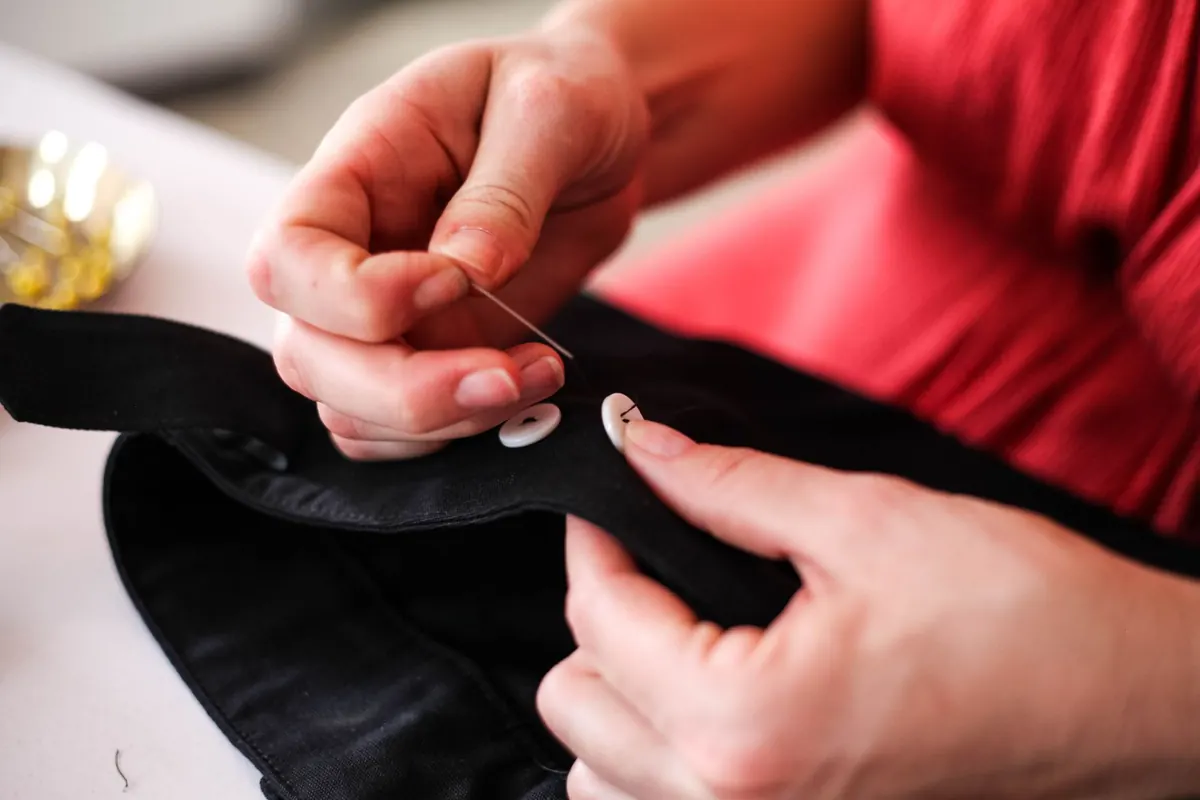
- Needle. A curved needle makes sail work far easier, especially in the middle of a panel. Push it through on the curve rather than straight.
- Stitch pattern. A machine zigzag is ideal because it stretches with the cloth. By hand, work a zigzag-style whip stitch or herringbone over the raw edges, keeping stitches even and, crucially, loose. Pulling thread tight puckers the fabric and creates a line of stress points that tears later.
- Finish. Knot on the inside of the sail, away from where a line can catch, and trim the tail to a few millimetres.
If you have a machine, the neatest result on ripstop nylon is to overlap the torn edges by about 6mm, tape over the top as a temporary hold, then zigzag straight down the middle.
Seam failures
Seams nearly always fail because the thread has rotted in sunlight, not because the fabric has gone. Run a finger down the seam: if the thread snaps and pulls out in short, powdery pieces, the whole seam is suspect and worth re-stitching along its length rather than just at the split.
If the original holes are still sound, stitch back through them — the fabric is already perforated there, so you're not adding fresh weak points. If the cloth at the seam has frayed or stretched, tape a strip over it first, then zigzag through the tape and both layers. Where a spar pocket has torn away from the sail, patch the pocket material from both sides and stitch around the outline of the original seam.
What not to use
Duct tape, gaffer tape and parcel tape all look like a solution on the beach and all end badly. The adhesive migrates in the sun, leaves a sticky residue that is difficult to shift, and the tape shrinks and cockles, dragging the sail out of shape around it. Superglue goes brittle, stiffens the cloth and usually cracks along the fold line within a few flights.
Test the repair in light wind first
Take the kite out in the gentlest wind you'd fly in and keep the first session short. Watch the repair from the ground — a lifting edge, a flutter or a new wrinkle spreading from the patch means that area is under load and needs stitching. Land and check the tape edges; if they're peeling, press them again while the kite is cool, or add a stitch.
Keep a small repair kit in the kite bag: a metre of spinnaker tape, a couple of pre-cut ripstop patches, a curved needle, a card of polyester thread and an alcohol wipe. Most sail damage happens well away from the table where you'd fix it, and a five-minute repair on the field beats a wasted afternoon.
Photo: Los Muertos Crew / Pexels